
Label reading guide
Clean Label Supplements: What to Verify
Clean label is a useful phrase with a loose definition. On a supplement bottle, it usually points to a shorter ingredient list, fewer synthetic extras, and clearer sourcing statements. This page shows you which parts of that claim you can check yourself, and which parts are just positioning.
The phrase itself
What "Clean Label" Typically Signals
The term has no single regulatory meaning. In practice it describes products that present a simplified ingredient list and avoid fillers, artificial colors, or unnecessary additives where the manufacturer can. First Day Men's No Junk Multi is positioned directly around a cleaner ingredient profile, and Ritual Multivitamin for Men 18+ is often covered for traceable sourcing. Both are examples of how the phrase gets used. Neither example proves quality on its own.
That is why it pays to treat the phrase as a claim to inspect rather than a category to trust. A brand can shorten its list by removing ingredients and still leave the nutrient amounts you actually need too low to matter. Reading the two parts together — what is in the tablet and how much of each nutrient it delivers — is the only way the claim holds up.
Verification starts here
The Ingredient List Is Where You Check the Claim
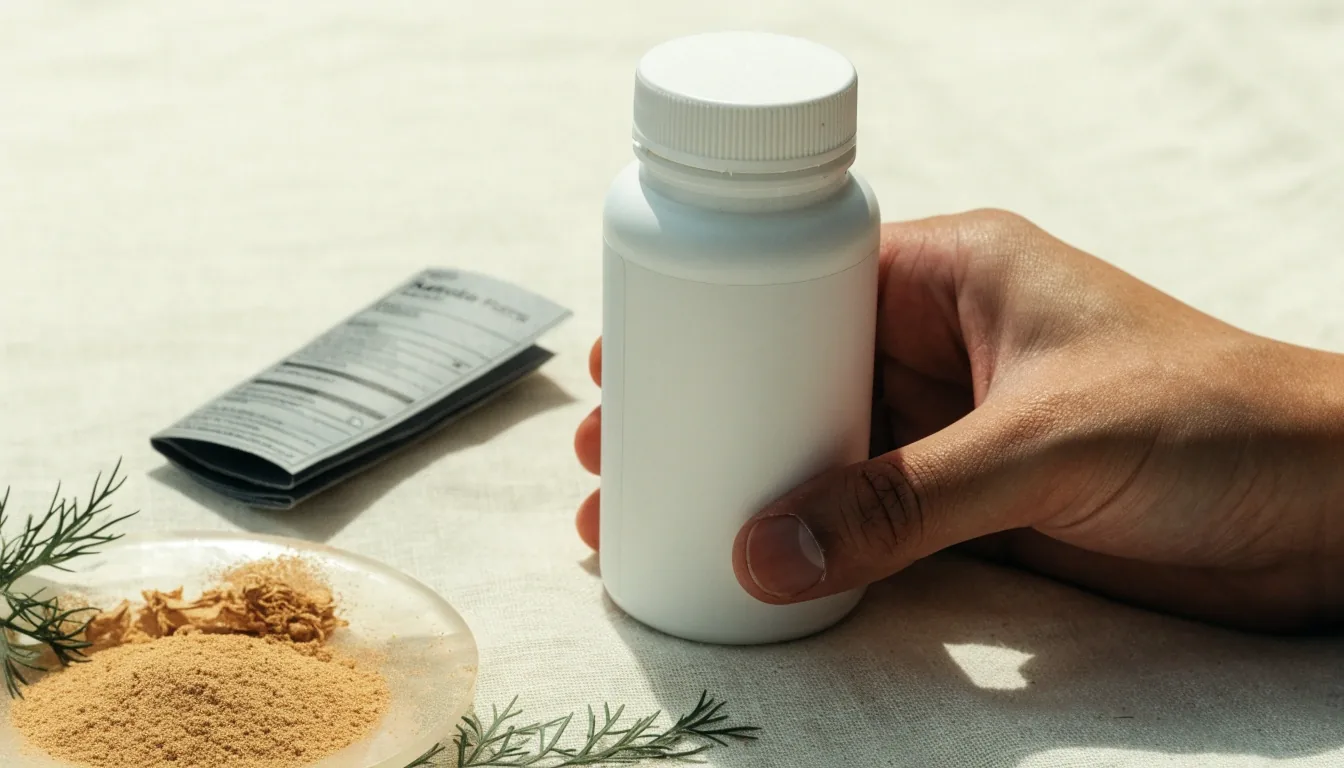
Everything below the supplement facts panel is fair game for verification. Look for the fillers, binders, sweeteners, and gelling agents. A short list is easier to read, though a short list is not automatically better than a longer one. What you are checking is whether the product's stated positioning matches what is actually printed. If a brand claims a cleaner profile and the ingredient list backs that up, the claim has substance.
Practically, scan the panel in this order: excipients first, then the nutrients and their reference-intake percentages, then any blend whose individual amounts are not disclosed. An undisclosed blend is not automatically a flaw, but it does mean you cannot check how much of each ingredient you are getting.
What to scan on the panel
Fillers and binders
These hold a tablet together or give a capsule bulk. Reasonable in small amounts; worth noticing when several appear together.
Colors and sweeteners
Often cosmetic. A gummy needs some, a capsule usually does not — so ask what the sweetener is doing there.
Nutrient amounts and blends
Compare the listed amount against the reference intake. Blends that hide individual amounts limit how far you can verify.
Two different things
Organic-Leaning Versus Certified Organic
These are not the same thing. Organic-leaning describes a general sourcing direction, often used for whole-food-style supplement families such as Garden of Life's mykind Organics line. Certified organic is a specific status awarded by a named body. If a label says certified, it should also say who certified it. If it only says organic-style or plant-based, that is a positioning statement rather than a certification, and you should read it as such.
Organic-leaning
A general direction of sourcing — plant-based, whole-food style. It describes intent, not a verified status, and it carries no named certifier to look up.
Certified organic
A status given by a named body after its own checks. The mark only helps you when the certificate issuer is printed alongside it.
The quick test: if the front of the bottle says certified, the back should name who certified it. No name means you are reading positioning, and you can weigh the rest of the panel on its own merits.

What Third-Party Certification Actually Means
Third-party certification means an organization outside the manufacturer tested or audited something about the product, whether that is ingredient identity, contaminant limits, or manufacturing practice. The value depends entirely on which body did the testing and what they tested for. A certification mark without an identifiable certifier tells you very little. A mark that names a recognized testing organization gives you something specific to look up.
Three questions that make a mark useful
- 1.Which organization issued it, and can you find that organization independently?
- 2.What did they actually test — identity, purity, contaminants, or the facility?
- 3.Is the scope listed on the label, or only on a separate page you would have to chase?
Traceability and Sourcing Statements
Some brands publish where their ingredients come from or how they are processed, and that transparency is part of the product story rather than a label footnote. Ritual's coverage often focuses on exactly this. When you evaluate a sourcing statement, ask whether it names a supplier, a region, or a standard. Vague language about "quality ingredients" is not traceability; it is advertising copy with no anchor.
Names something
A supplier, a growing region, or a named processing standard. This is checkable and worth your time.
Describes a value
Words like natural, pure, or premium. They signal intent but give you nothing to verify.
Points elsewhere
A QR code or a web page with the sourcing story. Follow it — the answer should be there, not promised.
Vegan, Gluten-Free, and Similar Claims
These descriptors are more checkable than clean label, because they refer to definable properties. Equilibra Multivitamine Minerali, for instance, is described as a gluten-free tablet formula. Vegan positioning appears across several men's products, including Ritual for Men 18+. If one of these attributes matters to you, treat it as a filter rather than a quality ranking. It narrows your options; it does not tell you which of the remaining options is better formulated.
Use them to remove products that do not fit your needs, then judge the ones that remain on nutrient coverage, serving size, and format — the parts that decide whether you actually keep taking it.
How to Compare Two Clean-Label Products Fairly
Put the panels side by side. Compare serving sizes first, then nutrient profiles at reference intake levels, then ingredient lists. Only after those three checks should you weigh sourcing statements and certifications. Products that look similar on the front of the bottle can differ considerably once you do this. If you want the label-reading steps in more detail, the daily multivitamin guide covers them from the top.
Match serving sizes
One product's daily serving may be one tablet, another's two or three. Until the servings match, the panel numbers are not comparable.
Compare nutrient profiles
Line up each nutrient against its reference intake. Check what each product covers well and where one falls short of the other.
Read the ingredient lists
Only now do the excipients, sweeteners, and sourcing statements decide between two products that already cover what you need.

When Clean Label Should Not Decide for You
A cleaner ingredient list does not compensate for a nutrient profile that does not fit your needs, and it does not make an unsuitable format suitable. If you dislike gummies, a clean gummy is still a gummy. Use clean-label criteria as a tiebreaker between products that already meet your coverage and format requirements, not as the first filter. That ordering saves you from buying a well-sourced product you never take.
Before you buy, settle two things with yourself: does the product cover the vitamins and minerals you are actually trying to support, and will you take it on a normal weekday? If either answer is no, the label is not the deciding factor.
Questions readers send us
The same few come up whenever the topic of clean-label men's vitamin supplements is raised. Short answers here, with the longer reading in the guides.
Spotted a detail that no longer matches a label? Write to us at Contact and we will update the page.
Does a shorter ingredient list always mean a better product?
No. A short list is easier to read, but it can also mean fewer nutrients or smaller amounts. Compare the nutrient profile at reference intake levels before you treat length as a virtue.
If a bottle says "third-party tested", what should I look for?
The name of the organization that did the testing, and what it tested. A phrase with no named body is a claim you cannot follow up, so it counts for very little.
Are capsules cleaner than tablets?
Not by default. Tablets usually need binders and coatings; capsules often need fewer excipients but occasionally use a preservative. Read the panel rather than assume the format decides.
Do I need a gluten-free or vegan product?
Only if the attribute matters to you or your routine. Treat it as a filter that cuts the list down, then judge what remains on coverage, serving size, and whether you will keep taking it.
Where should clean-label criteria sit in my decision?
After coverage and format, as a tiebreaker. Make it the first filter and you risk buying a well-sourced product that does not cover what you need.
Keep reading, then compare on your own terms
The label-reading habit works best when it is applied to a shortlist you already trust. Start with the daily multivitamin guide if you want the full step-by-step method, then move to the format comparison if you are deciding between a capsule, tablet, or gummy. Our Makassar office is reachable on weekdays if you want to ask about anything on this page.
Daily Multivitamin Guide
The full label-reading method, from serving size to nutrient percentages.
Compare Supplement Formats
Capsule, tablet, gummy, or powder — what each one asks of your daily routine.
Age-Specific Formulas
Why the same bottle is not framed the same way for every decade.
Energy & Endurance Support
Nutrients commonly discussed around everyday energy and stamina.
Reach us on weekdays
Jl. Sultan Hasanuddin No. 10, Sawerigading, Ujung Pandang, Makassar, 90115
Monday to Friday, 09:00–18:00
+62 411 369 3962 · [email protected]
Dietary supplements are not medicines. Read the label before use, and speak with a qualified professional if you take medication or manage a health condition.